
|
|
|
#1
 05-04-2021, 10:41 PM
|
|||
|
|||
|
Which capacitor types are the least reliable?
For vintage TVs, which types of capacitors are the least reliable when it comes to aging? I’ve seen the following types used in non-solid state tube TVs:
My understanding is that ceramic and polyester capacitors age gracefully, whereas paper and electrolytic are the least reliable as they age. But what about polystyrene and oil capacitors? How do they rank against these other types of capacitors in terms of life expectancy? 
|
|
#2
05-04-2021, 10:56 PM
|
||||
|
||||
|
You're forgetting mica capacitors. Micas usually are fine in RF/IF stages but have a high failure rate in sweep circuits especially in pre-1960 sets.
Your ordering is close to accurate as a ranking of worst to best. Oil caps vary depending on country (US and european are good, some Japanese oil filled caps are good and others are terrible). All types can fail, and I've probably seen at least one bad cap of each type, even orange drops.
__________________
Tom C. Zenith: The quality stays in EVEN after the name falls off! What I want. --> http://www.videokarma.org/showpost.p...62&postcount=4
|
|
#3
05-05-2021, 12:24 AM
|
|||
|
|||
|
Polyester film capacitors and ceramic capacitors with a 105 celsius temperature rating and a voltage rating that is twice the applied voltage will last multiple human lifetimes. Their life increases by (appliedVoltage / ratedVoltage) raised to the power 7, so the hogher the voltage rating, the better, assuming size and cost aren’t an issue.
I am familiar with how electrolytic age, but oil and paper capacitors are new to me. I mainly have 1990s TVs, and only just got into pre-solid state TVs. So these older capacitor types are new to me. In 1990s TVs, ceramic and film are never an issue, but a few electrolytics in the punishing parts of the chassis need to be replaced. I typically replace the worn electrolytic caps with either miniaturized film caps or solid polymer caps so that they are never a concern again. Looking at my recently acquired Panasonic AN-72C, I will probably replace the paper, oil, and electrolytic caps with polyester film. The modern miniaturized film caps are quite nice. I will check before and after the change with my oscope to ensure voltage ripple and noise is reduced after the change. As a newcomer to pre-solid state TVs, I must say the simplicity and elegance of these older TVs is quite simply wonderful. I wish the case for my new 1968 TV was clear so that all of the tubes glowing could be visible. Such amazing technology should not be hidden. Last edited by LukeSimon; 05-05-2021 at 12:29 AM.
|
|
#4
06-15-2021, 10:30 PM
|
||||
|
||||
|
Quote:
I was given a bunch of Pyramids with a yellow rubber cover on them and out of 50 or so I've tested they all checked out good. Also to add to the list of lousy capacitors are these plastic cased electrolyitics. 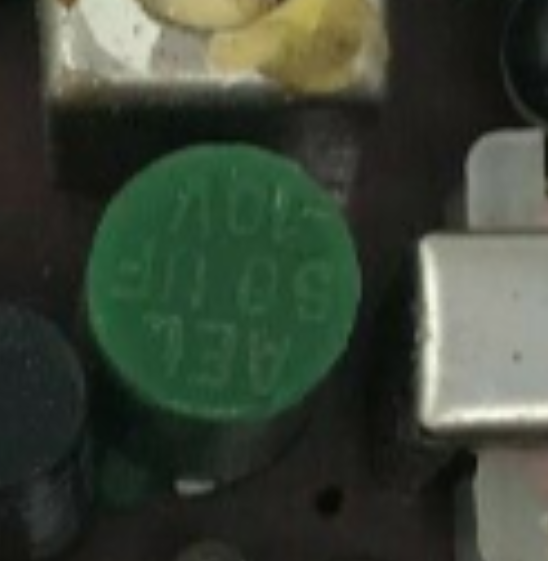
Last edited by Tube TV; 06-15-2021 at 10:33 PM.
|
|
#5
06-16-2021, 03:03 PM
|
||||
|
||||
|
Quote:
 Hmm, get an old "prison TV" , retrofit a tube chassis, and there ya go, pretty tubes glowing for all the world to see Hmm, get an old "prison TV" , retrofit a tube chassis, and there ya go, pretty tubes glowing for all the world to see 
|
| Audiokarma |
|
#6
06-16-2021, 05:23 PM
|
||||
|
||||
|
Quote:
Rough ranking of component costs in analog CRT TVs, ignoring the CRT itself: Tube sets: Large transformers, speaker Active elements (tube sections) Capacitors/small coils Resistors Transistor sets: Large transformers, speaker Transistors, coils, capacitors (order depending on size/power/complexity) (most caps lower voltage rating than in tube circuits) Resistors Bipolar analog IC sets: Large transformers, speaker IC package / pin count Coils Capacitors Resistors PNP transistors inside IC (large area, poor performance, and very rarely used) Resistance inside IC NPN transistors inside IC (nearly free)
|
|
#7
06-17-2021, 08:55 AM
|
||||
|
||||
|
Add tear drop tantalum to the list, they have a tendency to short as a primary failure mode.
|
|
#8
06-17-2021, 09:23 AM
|
||||
|
||||
|
Quote:
|
 |
|
|


 Linear Mode

