
|
|
|
|
|
#1
 11-05-2019, 09:26 PM |
||||
|
||||
|
Hehehe, pardon me as I run off to the print shop.
 So that I can tell so far, I've already screwed up, ironically. I was able to clean the rubber off by removing the screw on the top of the spindle and disassembling the latch but when it came to the sticking laser stop I had to get underneath the optical deck as up to now I was just pushing it open with my finger when the disc moved into place. The deck is mounted with three posts and three hex nuts. As it turns out if I had read the manual this step requires realignment once the deck has been moved, so sure the stop moves freely now but without the specialty jigs I have no way to realign the deck. Mother$*&@. Also as it turns out there's a Ni-Cd battery mounted underneath the machine in the lowest possible place. Apparently the 1Kb of dump memory (the player can operate as a standalone device for interactive discs by data being stored in audio format at the the beginning of a disc in the Right channel) has a battery backup for power interruptions. Why it has this exactly I can't figure out as after a power failure you will need to restart the disc again anyways which would automatically reload the dump. Anyways a battery of this age is obviously going to be leaking and it's pretty easy to clip out. 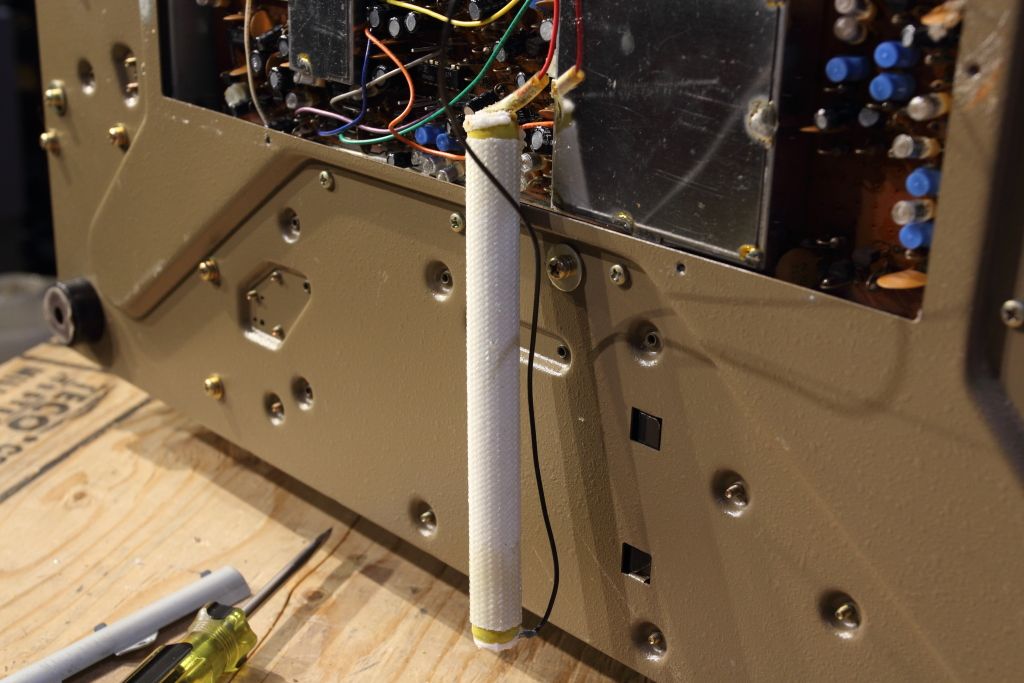 Edited: Oh but this is kinda cool. While this is all the original DiscoVision livery, the internals have been upgraded to the Pioneer PR7820 Series III, which was the late revision just before it was discontinued. The two big things here is faster access times and complete support for all the available interactive DiscoVision titles, plus backwards compatibility with the older host interfaces. 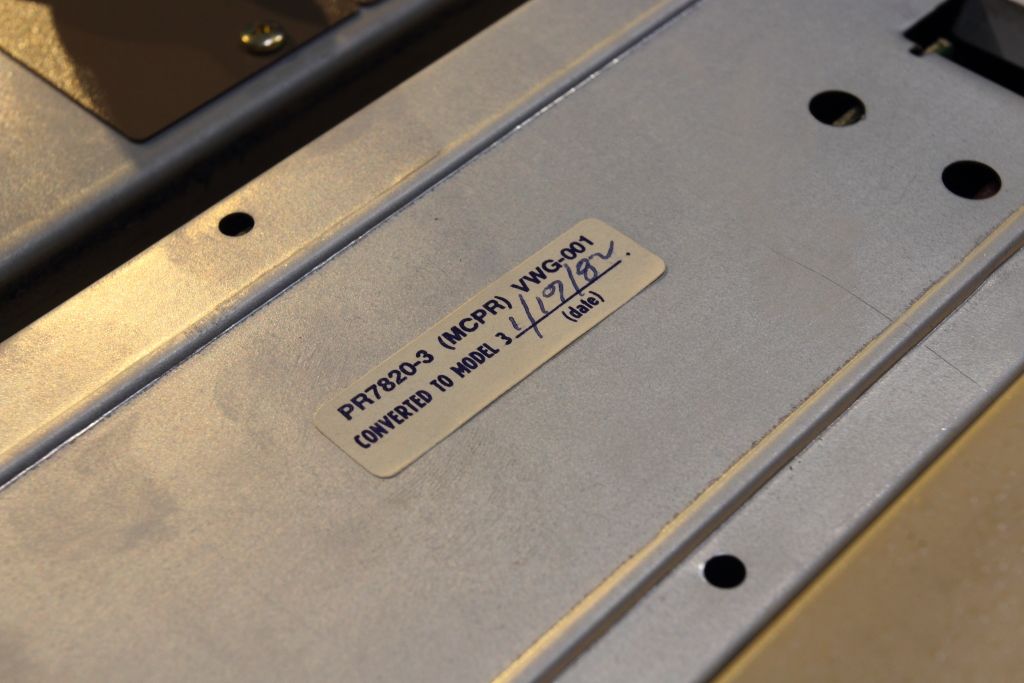 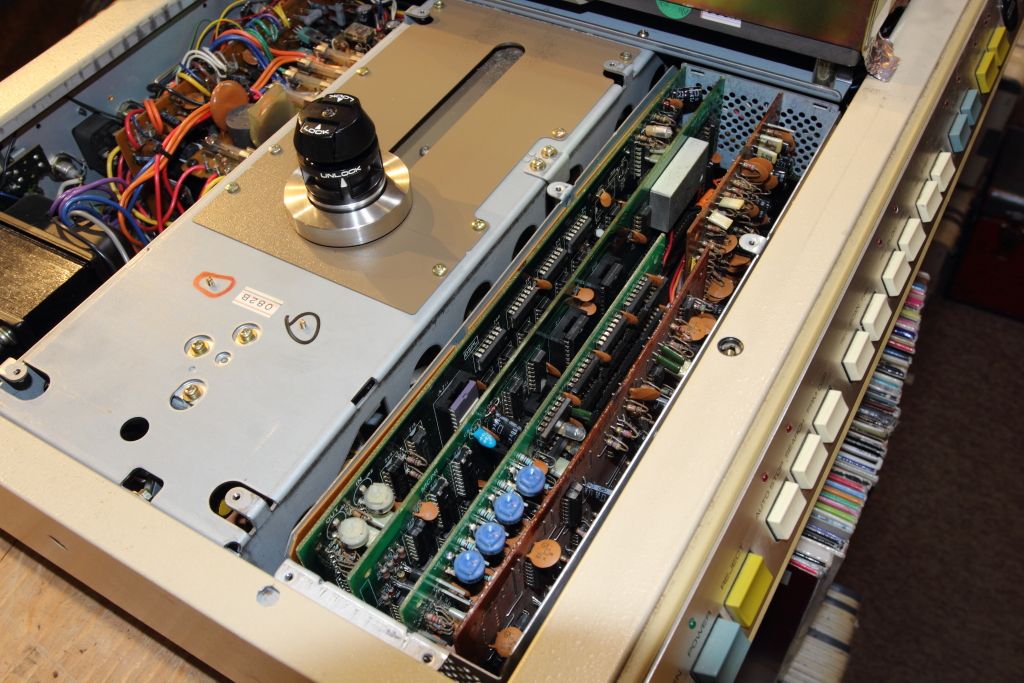 One of the things included with the player was a print copy of the programming reference for the Series 3 revision. I have yet to find it online anywhere so I'm rather desperately trying to find a place to get it turned into a PDF. Last edited by MIPS; 11-05-2019 at 10:46 PM. 
|
|
#2
08-21-2022, 11:15 PM
|
||||
|
||||
|
Quote:
I do hope you have success in getting this player to work. In my pile of things to do when I retire is a Magnavision VH-8000 player that also does not recognize/read discs, if I remember right. These early machines have a "cool factor" that makes them much more interesting than all of the look-alike front-load black players from 1985 and later.
__________________
Chris Quote from another forum: "(Antique TV collecting) always seemed to me to be a fringe hobby that only weirdos did."
|
|
#3
08-24-2022, 01:34 PM
|
||||
|
||||
|
I have at least three VP-1000's now as after one appeared people started just sending them towards me. One turned out to be a pre-recall unit (overheating issues) which means it's a really early unit that never saw a service center and they all seemed to work after a heavy cleaning (one in particular had a dirty encoder on the sled so it didn't know where it was until that was cleaned). They use the same Toshiba tube as the 7820 as well so unless the 7820 previously had an insane amount of hours I'm not considering the possibility I'm looking at wavelength drift from age or helium diffusion which will affect the playback.
I've considered getting a magnavision as they seem to show up from time to time but for being the loser in the first generation players it's also the most expensive. It's arguably "the first*", it looks way cooler than the 7820 and it had that Leonard Nimoy celebrity endorsement.
|
|
#4
08-24-2022, 02:41 PM
|
||||
|
||||
|
"it looks way cooler than the 7820 and it had that Leonard Nimoy celebrity endorsement."
I believe he also endorsed Betamax too, back then. Are you familiar with the web site Laserdisc Database? www.LDDb.com I'm a member there, and they would love to see/read about your PR-7820. If you want another pre-1985 player look for an LD-660 or a PR-8210. Don't waste your time/money on a Magnavox player unless it's for display only...
|
 |
| Thread Tools | |
| Display Modes | |
|
|


 Hybrid Mode

