
|
|
|
|
|
#1
 06-29-2014, 04:03 PM |
||||
|
||||
|
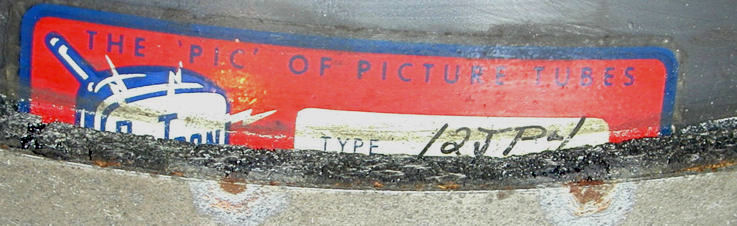
Phil are you sure that's a 12JP4 and not a 12LP4, JP4 shouldn't have an ion trap.

|
|
#2
06-29-2014, 04:29 PM
|
||||
|
||||
|
Well, the rebuild sticker on the CRT said 12JP4, but looking back at my article, I guess the consensus was that the rebuilder had substituted a different gun, hence the ion trap magnet.
 Phil Nelson
|
|
#3
06-29-2014, 05:13 PM
|
||||
|
||||
|
Quote:
The JP4's in the few sets I've had or worked on seemed like Pyrex, thin glass all around, even on the faceplate, almost seemed like a pre war type. I currently have only one Crosley with a Dumont chassis and CRT, I think it's a thinwall tube but I don't recall if it had a bulge or not, maybe I have a picture of it saved somewhere. Other post war tubes I've seen like that are the 7JP4 electrostatics and the 9QP4 used in the little 1956 GE Portables. The original and early Dumont tubes used a weird gun, it was odd in some way but I can't remember exactly how, didn't look much like the one in the 10BP4 etc, most of them have an ion burn in the center also.
|
|
#4
06-29-2014, 05:16 PM
|
|||
|
|||
|
It is known that Dumont had different envelopes for one of their 15" tubes with the same number.
I recently had a Dumont 12qp4 with a different anode connector than the Dumont ball -- it had the 12lp4 type cup. It was an etched Dumont but was a rebuild. I think the yoke mount in both pics shown has 2 sets of mounting holes, with slot.
|
 |
| Thread Tools | |
| Display Modes | |
|
|


 Hybrid Mode

