
|
|
|
|
|
#1
 07-13-2008, 11:40 AM |
|||
|
|||
|
To the person who blames the internet for the decline of... everything:
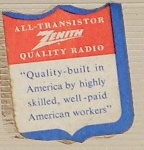
Are you insane? First off, quality started going downhill well before the internet took off. Zenith in the early 1990's is a great example. As for Hollywood not producing a great movie since 2000? I happen to think that Hannibal and the remake of Red Dragon were pretty good. Maybe not masterpieces, but certainly not bad. The Others was also a damn good movie. The internet has its cons, like anything else, but it's spawned a lot of original works. Just look at albinoblacksheep.com. As for low quality junk: The major well established brands in the USA produce low quality junk, however Japanese and Korean companies make better stuff overall. I could go into how our domestic brands are being kept alive through subsidies and outsourcing, but that's trending into politics. Overall, things are CHANGING. Places like Hollywood have grown into sprawling decaying mounds of red tape which stifles creativity, hence the number of forgettable movies it produces. Movies like the "new" Indiana Jones movie star aging actors and aging directors/script writers who are over the hill. That's why the newest Indiana Jones movie can't hold a candle to the original. While Hollywood dies a slow, painful death; independant filmmakers, who are generally NOT making movies for money, are making some movies that don't have bloated budgets, and while they lack the polish that most Hollywood movies have, they usually have a story, and maybe even actors that put Hollywood to shame. If anything, the internet is forcing old business models to either evolve or die, and it's created, and creating new forms of entertainment. Older mediums like the movies and TV are trying to adapt, hence the 24/7 media coverage and cranking out low quality movies that rehash the same few stories over and over. 
|
|
#2
07-13-2008, 05:45 PM
|
||||
|
||||
|
...
__________________
1977 Zenith Chromacolor II A Very Modern Zenith
|
|
#3
07-13-2008, 06:44 PM
|
||||
|
||||
|
Quote:
What shops we have left were not around in the '70's and wouldn't know what to do with an older set if they had one. Even when there were older guys left around here, they did not want to work on anything over a few years old and would usually turn people away at the door. Most shops around here stopped taking in tube sets by the late '80's or early '90's. I have a friend who recently got out of TV repair after 35+ years and I'm always joking with him about getting help to fix my tube TV's. He lets me know real quick that he's not interested and that he forgot (on purpose) what he knew about the old stuff. He probably has too many memories of fixing older sets just to have them come back in a week with a totally different problem. Many times, the customers think the whole TV should be guaranteed, not just the work performed. From what I can tell, most shops left in my area only take in large screen sets (LCD, plasma, RPTV, DLP, etc). A large chunk of their money is made on up-front check-out fees. There is one shop left, that I know of, that will still take regular old CRT sets. I get all his "junk" and it's almost never anything over a few years old. Back when I was getting junk there from the mid '90's to around 2000, 20+ year old sets were more common than newer models. I guess that was the time period when customers were refusing the repair estimates and letting the shop junk the set. The owner told me that older TV's are rarely brought in anymore.
|
|
#4
07-13-2008, 10:00 PM
|
||||
|
||||
|
I once asked a repair shop on LI if they had any tube tv's for sale. They showed me some modern CRT sets, and I replied, "No, I mean tube-chassis sets".
The owner says, "Tube-chassis? Are you kidding? No, haven't seen one in over 20 years!" And laughed at me, lol. It was memorable for me 
|
|
#5
07-15-2008, 05:29 AM
|
||||
|
||||
|
Quote:
Quote:
Here in Europe, Philips had a big problem in the mid-late 80s with their 45AX CRT, their first tube with square corners, it was meant to be a high quality product, yet many of them failed within a couple of years due to shorts and weak cathodes and some developed extremely poor focus in a matter of months due to an internal leak... The difference is that those failures were not planned, they were the result of unintentional manufacturing problems, Philips quickly corrected them and offered free replacement CRTs even for out-of-warranty sets... the later improved 45AX was in fact an excellent, durable, successful CRT that was still used by many quality European TV manufacturers in the early 2000s The other big difference is that, apart from the CRT, 90s Zenith and 80s Philips sets were nice, solid, well made sets... modern sets are 100% cheap junk... cabinets are made of thin junky plastic, CRTs are junk, speakers are junk, capacitors are junk, PCBs are junk, flybacks are junk, everything is poorly engineered and poorly put together with terrible ROHS lead free solder, and there are cheap nasty SMD components all over the place...
|
| Audiokarma |
|
#6
07-15-2008, 05:33 PM
|
||||
|
||||
|
Hi mhardy6647,
You inquired: "What do people in France do with NTSC TVs? :-)" Well, if you want to collect TVs of any era, France does not offer too much choice! The country used first 30/60/120/180/240 lines but no sets survive except very, very few in museums or private collections. 441 line TVs are rare but can be found, then 819 lines with Positive video RF and AM sound, then 625 with the same RF scheme no one else uses, then color with SECAM. So either you limit yourself to an all-French collection, or you widen your choice by accepting the Euro-standard used by most other countries (625, B/G and I, UK) and of course NTSC sets. By the sheer luck of birth, i have family in the US and first saw color TV in 1957 or 1958, which decided of my future career right there and then. Thanks to modern wizardry such as the Aurora products (Darryl, how can we ever thank you enough!) and affordable digital standards conversion, it becomes possible to operate all the major TV standards anywhere on the planet. Also, a TV is more fun when it works. All modern Western nations will be shutting down analogue transmissions between 2009 (USA) and 2012. Even if dual illumination is prolonged a bit because of political agendas, the global shutdown will take place fairly soon*, so i'm ready with a full array of LPTV transmitters + spares to face the great blackout. I've chosen NTSC/M, PAL B/G + I in UHF and SECAM L Vintage standards are 819/E and 405/A (modulators only, not broadcast) *Interestingly, France and England faced the same problem 30 years ago when the 819 line (Fr) and 405 line (UK) services were due for closure. Both countries maintained dual illumination of the old + new standard for a full 15 years before ending the service. I can't see that happening in today's fast-paced world. Final closedown of 819 took place in 1983, yes, it was that late! Best Regards jhalphen Paris/France
|
|
#7
07-15-2008, 08:25 PM
|
||||
|
||||
|
Quote:
 Over here in the U.S., on this board, someone said they ran a ATSC digital converter on an old 441 line system (we briefly used 441 lines before our NTSC 525 line standard) set and it does work. I know on my old black and white Sony, the picture is very crisp when I know they are sending an HDTV picture down the pike, usually NBC shows the Olympic trials in high def. I know it isn't true high def, but still, you can see the better picture quality.
__________________
Mom (1938 - 2013) - RIP, I miss you Spunky, (1999 - 2016) - RIP, pretty girl! Rascal, (2007 - 2021) RIP, miss you very much
|
 |
| Thread Tools | |
| Display Modes | |
|
|




 Hybrid Mode

