
|
|
|
#1
 10-07-2011, 10:58 PM
|
||||
|
||||
|
Fire!
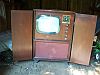
We had a fairly scary situation the other day in our museum. An RCA 721 was one of several sets running in the display. After this particular set lost picture, we shut it off. But a minute or two later, we noticed that flames were coming out of the cabinet! Although it was a small fire, we had to use a fire extinguisher to put it out, and it was obviously an unsettling situation. We haven't done a full postmortem on the set yet, but according to the initial examination it appears that the filter caps shorted out and caused the power transformer to heat up. Possibly it heated enough to degrade the insulation on the wiring causing a massive increase in current, because the burnt primary leads seem to be the source of the fire. We're not sure yet, but we hope to figure out exactly what happened.
In all my decades monkeying with this stuff, I've never before heard of a case where an electrical fault, even in a 60+ year old piece of equipment, caused a fire. Smoke, sure. We all joke about the magic smoke. But fire? These sets were made, of course, a long time ago, but I was under the impression that by that point in time things had been designed, especially by big companies like RCA, with safety during failure mode in mind. And I also seem to recall that in order to qualify for the Underwriter's Laboratory seal the equipment had to be designed to fail gracefully, i.e. smoke was acceptable but fire, if any, would be contained. So I got to wondering, does anyone know how the design of this old equipment dealt with minimizing hazards during inevitable component failure? And has anyone else had the misfortune to actually experience an actual fire in an old piece of electronic equipment? --Dave Sica . 
|
|
#2
10-08-2011, 12:05 AM
|
|||
|
|||
|
Scary! I had a set with a resistor in the crt anode lead open and the arcing almost started the rectifier socket on fire. It was very close, the tv was running unattended at the time.
Now I NEVER leave old tvs or anything running unattended. If Im going to be out of the room for more than one minute I turn it off.
|
|
#3
10-08-2011, 12:27 AM
|
||||
|
||||
|
Since many of these sets were un-fused it's a miracle there weren't more fires, I guess they figured the 5U4 would blow and save the transformer, but if it's the transformer that's the problem I guess you're out of luck.
I too won't leave one unattended, I did accidentally leave a chassis and tube running on my workbench a few months ago while I ran an errand, luckily nothing happened and it was still playing when I returned. Probably a fuse on the AC line before it enters the transformer would be a good idea, one big enough to run the set though is still big enough to cook the transformer though if it's not a dead short. A cheater cord arcing at the connector pins can also start a fire without drawing enough current to notice something amiss.
|
|
#4
10-08-2011, 12:56 AM
|
||||
|
||||
|
Reminds me of the time I fell asleep while watching Johnny Carson on my CTC-16 years ago and waking up to the smell of a burnt flyback and a blank screen. Fortunately, no fire started but it did melt the 3A3 socket cup a bit.
Maybe that was why those HV cages are so sealed up and unvented on RCAs. And how many times have "you" fallen asleep in front of your set? Ok, at least don't fall asleep in front of something that's vintage!
|
|
#5
10-08-2011, 01:10 AM
|
||||
|
||||
|
My 5th grade teacher told me the story of her TV set catching fire back in the 50s. It was playing fine and she happened to wander away (as you do) for a moment or two. Next thing she knew flames were coming out of the back.
At least twice in years past the chassis of a set undergoing restoration at the Early Television Museum has caught fire. IIRC both were British prewar sets plugged into a 220 line, accidentally left on because the switch that killed 110 to the bench was a separate line. Good reminder not to get too casual with the old things.
__________________
tvontheporch.com
|
| Audiokarma |
|
#6
10-08-2011, 06:21 AM
|
||||
|
||||
|
I have noticed for old equipment that was designed for commercial/industrial use (jukeboxes, PA amps, broadcast equipment) and which was designed for 24 hr. a day use there is always fuse protection in the power line and usually additional protection such as a B+ fuse. The notable exception is Hammond organs.
However most consumer equipment seems to have no protection. I always retrofit any old device I repair with a fuse, even table top plastic radios. The only ones I don't are series string radios with a tube rectifier as the rectifier cathode is designed to be fusible in case of a short and usually a portion of the rectifier filament acts as a fusible/surge resistor. Also I don't let there be anything on the power line in the set before the fuse. If there are noise suppresion capacitors across the line I just remove them and have had no trouble. I replace all electrolytic/paper capacitors and any old silicon rectifier diodes before using a piece of equipment. I have had too many failures of these old things from previous experience to trust them. One was a shorted capacitor or diode in a Harman Kardon A-300 amp which worked perfectly on original components for years but luckily had a fuse which blew when the short occurred to prevent serious damage to the power transformer. I also have seen too many cases of burned/shorted wiring in places like Hammond organ tone cabinet connectors, and melted 5U4 tubes due to shorts where damage likely would have been minimized had a fuse been in the unit. The only time I actually experienced a fire was a flyback fire in an RCA CTC-31 when I was a teenager. Everything inside the HV cage was burned and melted. Luckily there was no other damage to anything else but that was very scary. Another potential problem can be (i am theorizing) when the enamel insulation on magnet wire degrades due to heat. I have had several motors in electric fans burn up and my theory on this is that the motors were overheating for some reason in use which led to the insulation breaking down to the point where a short finally occurred across the windings and burned them up. This sounds like the kind of failure which may have occurred on Dave's set. If a motor has seized due to lack of lubrication and the windings look discolored, even if I can relubricate it and get it turning again I just replace it due to perhaps the increased possibility of a short.
|
|
#7
10-08-2011, 09:28 AM
|
||||
|
||||
|
God bless; you caught it!!! I hope you can save the set. As far as the cause, take a good look at the on-off switch. I had a '50 or '51 RCA (KCS49, IIRC), that had a B+ short, and the on-off switch began to arc at 20 amps, and set fire to the greasy wires. From there, it started up the inside of the wood cabinet front panel. I too got lucky and caught it, and saved the whole set only because the back was off, and the back of the switch is exposed in that chassis. I've also seen the on-off switch fail and flame up in CTC-16 non-remote sets.
Charles
__________________
Collecting & restoring TVs in Los Angeles since age 10
|
|
#8
10-08-2011, 12:24 PM
|
||||
|
||||
|
Yikes! I used to intentionally over voltage caps scrounged from dead SS stuff to make them explode, and in addition to the mineral oil steam they would some times catch fire. I also once acidently cooked a DMM by measureing line voltage with the test lead connected to the(effectively shorted) 10A terminal and that almost caught fire(that scared the crud out of me).
Only time a TV ever smoked on me was when I variaced up my 9-t-246....No raster ,but all seemed well, and I wanted to test the sound as I was doing so I heared a sizzling sound and didn't make it to the switch before one of the papers let loose both wax and smoke.
|
|
#9
10-08-2011, 02:16 PM
|
||||
|
||||
|
You are lucky.
How many times have we seen sets brought back to life by replacing only what is wrong, NOW, and then having to deal with it again when something else dies? I'm sorry the transformer cooked, but it should have had all of the electrolytics replaced, especially if it is being run regularly. I sure dont want a 5U4 to be acting as a fuse! Almost none of my old electronics came with an inline fuse. Now, most of them do. I'd rather lose a fuse than lose a really hard to find transformer... like when I got my DuMont... It's slowly being re-capped, and with each one, the sound becomes more clear, or, in the case of the last ones, I could hear the vertical sweep running... Still no HV, though...
|
|
#10
10-08-2011, 08:55 PM
|
||||
|
||||
|
I have had a few modern sets catch fire at work. One was an Akai plasma, and we taped it. It had a note on it "do not plug in, smokes". So we took the back off, whipped out the phone cam, and taped it. It was a mylar cap, had a nice white arc going, then caught fire.
I had a Philips LCD inverter with a bad solder joint arc bad enough to ignite the circuit board. These were all burned under controlled circumstances. But it makes you think about the unfortunate times were these TVs burn when nobody is around to put them out.
|
| Audiokarma |
|
#11
10-08-2011, 10:26 PM
|
||||
|
||||
|
Quote:

|
|
#12
10-09-2011, 11:44 AM
|
||||
|
||||
|
Quote:
Charles
__________________
Collecting & restoring TVs in Los Angeles since age 10
|
|
#13
10-09-2011, 04:23 PM
|
||||
|
||||
|
On the CFL note, I have one in a fixture in the house here. I have left it turned on for several years, and it finally died. When it did, it got the base so hot that it smoked, burning dust. It's inside of a metal casing, but it could have set my old wooden house on fire! I was home when it happened, and when I smelled the burning hair smell (I have 3 useless kitties here, so theres cat hair around) I ran and turned off the fixture.
The longer I have CFL's, the more nervous I am. I use them at work, too, and several have gotten hot enough to trip the overheat switch inside the light fixtures... and these fixtures were set up for incandescent lighting initially! One sent sparks down to the floor! They were "Lights Of America" branded. We use Sylvania's now.
|
|
#14
10-09-2011, 05:19 PM
|
||||
|
||||

Watching my CTC-4 right now. I left it unattended for a couple of hours once, then thought about what I did.
 Now I won't leave it for more than a couple of minutes, and even that seems too long. Now I won't leave it for more than a couple of minutes, and even that seems too long. Great chassis, in super condition, with very low hours when I got it, but these precious old relics can't really be trusted the way they could have been when they were new. Same with the B/W sets in the collection. Great chassis, in super condition, with very low hours when I got it, but these precious old relics can't really be trusted the way they could have been when they were new. Same with the B/W sets in the collection. 
__________________
stromberg6
|
|
#15
10-09-2011, 07:25 PM
|
||||
|
||||
|
Quote:
__________________

|
| Audiokarma |
 |
|
|




 Linear Mode

